I am the vine, ye are the branches: He that abideth in me, and I in him, the same bringeth forth much fruit: for without me ye can do nothing. - John 15:5
And the same day, when the even was come, he saith unto them, Let us pass over unto the other side. - Mark 4:35
...weeping may endure for a night, but joy cometh in the morning. - Psalms 30:5b
...strait is the gate, and narrow is the way, which leadeth unto life, and few there be that find it. - Matthew 7:14
...And the Spirit of God moved upon the face of the waters. - Genesis 1:2b
The Lord is my shepherd; I shall not want. He maketh me to lie down in green pastures: he leadeth me beside the still waters. - Psalms 23:1-2
Welcome to Adam2.org!
Thank you for visiting ADAM2.ORG and your interest in our studies and resources. We are currently going through a growth
phase and editing and expanding to include other features and writings. We hope you check back often for updates, especially in our Studies' Section.
About Us ▼
Adam2.org was established by our founder, Ken Livingston, in July 1999.
Having grown into an international organization consisting of thousands of members and visitors from over 50
countries, we are not affiliated with any group,
denomination, church or other controlling entity or otherwise, with the exception of... Read more...►
Studies ▼
Thank you for your visit. We hope you benefit from our resources and ask you to
recommend us to a friend.
If you aren't sure what your state of life will be when this one is over, we encourage you to seriously
consider this while you have opportunity. Nothing in this life you will do will be as important!
Likely, you have made every preparation for your present life.
You owe it to your self to prepare for what comes next. It won't cost you a thing! Continue reading...►
Excerpts From Studies' Area ▼
Excerpt from: In His Presence.
"A self surrendered in the silence of His presence is a soul at peace in Him who reclaimed it! The earth and its burdens no
longer bind you and you are free to walk the stars, revel in His glory, bathed in His love. Time affects only the earthly,
but your spirit is free to soar the heavenlies -- and the hours pass quickly, while In His Presence!
To journey where no mortal may go: This Is Prayer!"
Excerpt from: Proofs of Growing In Grace. 1. Less temptation to focus on troubles or talk about them to others... 2. Less temptation to resent and retaliate when insulted or abused... 3. Joy under crosses, disappointment, and severe pain...
Each month a featured writing from different authors will be posted below as a main feature in our center section.
The nature of these writings will vary from devotional, to inspirational, topical and informative for the current
state of our Christian culture. You may access this full feature with the link below. ▼
Opportunities for Service ▼
Each day a host of members and visitors from around the world visit our site and use our online resources, all at no cost. We plan to continue doing so. As we have grown, so too have our needs. We would like to extend an invitation for you to become an integral part of our efforts in helping others. Read more... ►
For those who would like to contribute to our Online ministry, we welcome your donation. Some of you have been looking for a way to give towards an international effort in helping others. Your contribution will not only go a long way in meeting our current and future challenges in maintaining and improving our capacity to aid others, but will place you within His channel of blessing to you for having done so. Your bread upon the waters will not go unnoticed by Him (Hebrews 6:10). Read more... ►
Shocking Finding: Two-thirds (67%) of pre-teen parents claim to be Christian, but only 2% of all pre-teen parents actually possess a biblical worldview...
American Values Personal Survey
Poll: American Majority Wants Congress to Pass Pro-Life Protections
Downward Trend Who Say Same-Sex Relations Morally Acceptable
Satan, The Father Of Lies
Battle For America's Soul
Ligonier Ministries' Biennial Study of The State Of American Theology
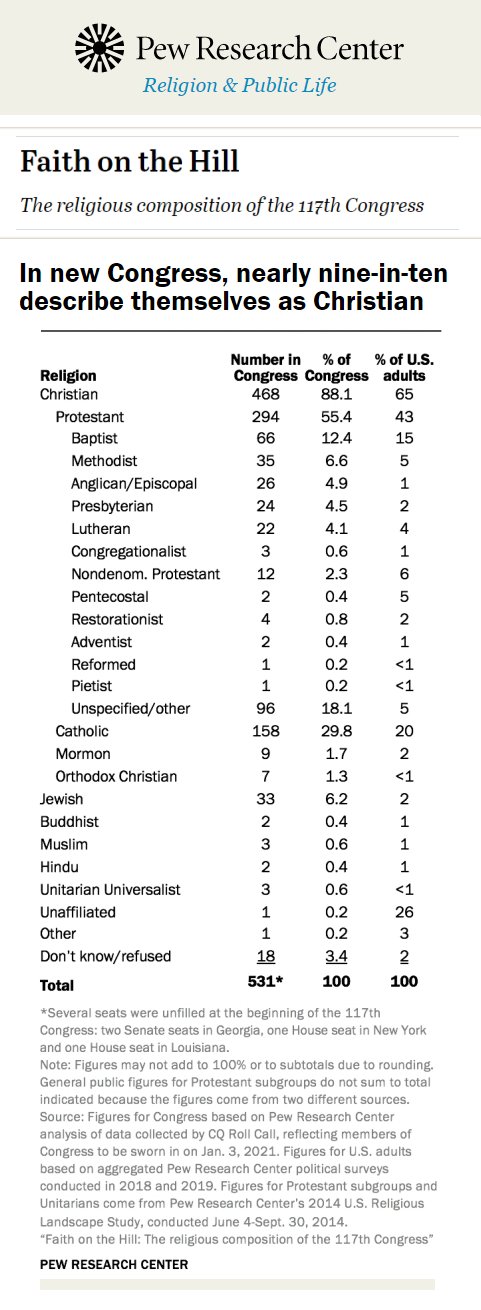
Among the Shocking findings are -
1. "31% of adults say it is very important for their religious faith to influence every dimension of their life."
2. "49% accept reincarnation as a possibility after they die."
Just one question: If, if this is true then why do our politicians and those who do their bidding in the media possess the spirit of antichrist—an anti-Christian spirit that treats others with such hostility, disrespect and mean-spirited? Why is the state of our country so godless and in an advanced state of decay and decline?
Something is grossly immoral and amiss!
Consider this from 3 of our founding fathers:
Benjamin Franklin - Man will ultimately be governed by God or by tyrants.
Jedidiah Morse - Whenever the pillars of Christianity shall be overthrown, our present republican forms of government - and all blessings which flow from them - must fall with them.
John Adams - Our Constitution was made only for a moral and religious people. It is wholly inadequate to the government of any other.
This may help to answer some of your questions as to our current national state of affairs. The honest student of history knows this to be true. Also read:
Original post: 11/30/2020. Reposted: 8/27/2021 (post FDA vaccine approval)
The time for choosing has come. As it pertains to the coming COVID-19 forced innoculations/vaccinations, the following is offered for the discerning Christian's consideration in choosing to comply:
Injecting a foreign substance into one's body against their will is in violation of the Nuremberg Code. Study it. There are 10 salient points.
But more importantly, the Christian's body is the Temple of God. It is sanctified. It is holy. It is sovereign. It is wholly God's.
When one comes to Christ they are yet in their sin. Their life and body belong to Satan. When Christ forgives their sin He sets them free from both — their sin and from Satan (Matthew 12:29). Neither no longer have dominion over that person. He sanctifies and sets them apart for His exclusive heavenly possession and holy divine purpose. In addition, we are to present our bodies to God as a living sacrifice. As such, we do not have the right/authority any longer to alter that sacrifice in any way. (I Corinthians 6:11; II Timothy 2:21; Hebrews 10:10; I Corinthians 3:16-17; II Corinthians 6:16; Romans 12:1-2) For a Christian to permit any entity other than God to take possession for any purpose sets that person over and against God's will. To allow anyone to inject into their body a foreign substance that has been determined to intentionally alter one's human genetic code, or the cellular structure of that body/Temple, is in violation of God's will. Therefore, one should consider very carefully their eternal standing with their Creator and Redeemer (Hebrews 10:29). We are at the precipice of having to choose whether we submit our bodies to be altered for our freedom, our very survival--to buy and sell as the Bible warns us about — and there is no going back. Some, in fact, already are being forced to do so. Already industries and businesses are requiring those who wish to utilize their services or enter their businesses the people must wear masks and some now are requiring the COVID vaccination. Revelation's mark is just behind the vail of tomorrow. Christ's return is imminent. The latest so-called medical pandemic has been an exercise in conditioning the world's population to willing accept for survival what they otherwise would reject with prejudice. The mass of the population is relinquishing their freedoms for the illusion of safety. They will never get them back. Incremental surrender will ensnare many if not guarded against by denying the first imposition upon your God-given human rights. Are you prepared to make the hard choices for your spiritual well-being? Christ said we are not to fear those who can destroy our bodies, rather we are to fear Him who can destroy both body and soul in hell (Matthew 10:28). The choice is clear for the Christian. For any Christian who remains uncertain as to whether they should allow the injection of a foreign substance into their body for any purpose they are strongly advised to seek immediate counsel from their credible spiritual advisor.
The time for choosing has arrived. Christ warned us of this time. We must look carefully at what He said and consider each part of it. Nearing His earthly end Jesus cautiously forewarned us of the signs of the end of the age. Using the backdrop of the magnificent new Temple nearing the completion of its construction under King Herod, Jesus foretold its coming destruction. Having their interest keenly aroused, His disciples questioned Him about the signs He knew would appear at His return and the end of the world. Listen to them carefully.
Matthew 24: 4-13
And Jesus answered and said unto them, Take heed that no man deceive you.
For many shall come in my name, saying, I am Christ; and shall deceive many.
And ye shall hear of wars and rumours of wars: see that ye be not troubled: for all these things must come to pass, but the end is not yet.
For nation shall rise against nation, and kingdom against kingdom: and there shall be famines, and pestilences, and earthquakes, in divers places.
All these are the beginning of sorrows.
Then shall they deliver you up to be afflicted, and shall kill you: and ye shall be hated of all nations for my name's sake.
And then shall many be offended, and shall betray one another, and shall hate one another.
And many false prophets shall rise, and shall deceive many.
And because iniquity shall abound, the love of many shall wax cold.
But he that shall endure unto the end, the same shall be saved.
Without going into each event specifically pay specific attention to the very first thing He warned of--deception. As you read you will see this deception is on a massive scale. Jump to the end—many offended, betrayal, large scale hatred of each other, iniquity rampant and, with hatred fore front, the love of many as cold as an unlit stove. He concludes repeating there will be massive deception. People will comply with what sounds reasonable they are asked to do. This is a trap. It means to enslave you, to arrest you, to rob you of your freedoms and finally your freewill. The Russian dissident under the communist Soviet Union spoke to the incremental choices that lead one down a fatal path:
The following is taken from the Book, Adam2: A Guide For The Walk Home, written by our founder.
It is A Commentary On The Gospel Of John, complete with a background look at the contemporary Jewish groups active in Jesus' day.
It includes a summary of each chapter, a redacted study of each disciple, a brief study of Gnosticism of the time, pertinent timelines,
and much more. Each chapter of study includes extensive Biblical references to the notes on the chapter.
A chronological excerpt of each section will be posted here at the beginning of each month. You can access free of charge at any time
a complete online digital version
for your further study. In addition, a link will be provided to purchase the book on CD to install on
your own computer for convenience of study and print. All we ask is that you observe the stated copyrights as with any book you buy over
the counter, limiting your print to only one hard copy for your own personal use. If further hard copies are necessary,
please contact us for an additional nominal fee. Thank you for your interest in this study. Our hope and prayer is that
through the work of the Holy Spirit as you study you will be blessed by it, and if so, recommend it to a friend.
Let us look this month at the group: Essenes from the book: Adam2.
I. MAJOR JEWISH GROUPS IN JESUS' DAY.
E. ESSENES.
Amidst the backdrop of the events, times, and people of our previous discussion arose the Essenes.
Is it any wonder, then, that during such a period of political and religious uncertainty and curtain of cultural clashes,
would arise a group who would separate from such a fragmented society? However, the precise origins of the Essenes are
about as obscure as that of the Pharisees. It is believed by most scholars that these ultra-separatists broke away from
the prevailing religio-political practices of Judaism in the Maccabean era, forming small colonies, or cells, throughout
the region, and in some cases, isolated communes. Very little was known of these purists Josephus so highly regarded
until the discoveries of the Dead Sea scrolls in 1947 and later excavations of the Qumran community located in close proximity.
This community, or commune of a monastic sect located at the northwest shore of the Dead Sea, between Jerusalem to the
northwest and En-gedi to the south, has since been believed by most to be that of the Essenes themselves. If so, then,
the numerous documents discovered there shed a wealth of information on their doctrines, beliefs, practices, nature,
and lifestyles. Although in none of those documents is a self-described reference to the name we are most familiar,
as with our Christian ascription
(
Acts 11:26;
26:28),
it may very well have been one assigned by outsiders. If so, as with our New Testament documents that are absent of such
Christian self-designations, it is quite natural that these are as well.
The etymology of the name assigned this group has been the source of debate for centuries, with still no clear consensus
on the matter. Because our space is limited, it is recommended the reader examine the studies of Marcel Simon, professor
at the University of Strasbourg in France, for his scholarly examination of the many possible roots of this name.
For our purposes, we will simply say in agreement with his findings, that it most likely came from the transliteration
of the Hebrew word, hasid, coming from the Aramaic, hasya in the singular, or hasen in the plural,
which at its core means, "a pious one." If Philo (Hellenist Jewish philosopher in Alexandria, Egypt, 30 B.C.-A.D. 45)
is correct in his assessment of the Greek, Essaioi, which could itself be a transliteration from the Hebrew,
hasaim, then another characteristic meaning is seen—"the silent ones."
As mentioned above, unlike the previous groups studied, neither the name nor an example can be identified within our New Testament.
Because of his ascetic wilderness lifestyle (who also, like the Essenes, is never reported frequenting the
Temple in Jerusalem), some believe that John the Baptist was a member of this sect.
He is also connected with a disciple named Banus, to whom Josephus confesses to having spent some time with in his teens
while examining each of the Jewish sects before deciding with which to align. This is one explanation for Josephus' high regard,
that reflected in his writings, for the Jewish Christian sect developing in Judaism (and in particular for Christ - Antiq. 18.3.3, p. 379).
Although there is irrefutable evidence of their existence prior to and during the time of Christ (Josephus numbers them at 4000, - Antiq. 18.1.5,
p. 377), no one really knows why, unlike the other major groups previously studied, they are not there mentioned.
Some have offered their exhaustive theories, the most common being: their chosen separation from the Temple life at
Jerusalem and their lack of contact with others outside their own communes. It should be mentioned here in support of
this theory, there are several other Jewish sects we have chosen not to study that were viable at the time of Christ
that also are not mentioned in our New Testament writings. Nevertheless, for the reasons that will be obvious to the
reader as this study unfolds, we have chosen to include only the Essenes.
Let us begin with the conditions of Judea at the outset of the Maccabean revolt (167 B.C.). Several things must be
remembered at this point that were converging factors for the rise of the Essenes, first that seen as a result of the
anonymous scribes who evolved from Ezra's day into the Great Assembly who legislated Jewish life from the Mosaic Code.
From the very beginnings of the Hebrews in Egypt
(
Ex.1:8-10),
other nations have struggled to come to terms with the definition, purpose, and place of these people in an ever-changing secular world.
This, they themselves have struggled with as well throughout their history. However, to the religious Jew, the Covenant Code at
Sinai made this perfectly clear. Listen to one contemporary Rabbi:
With the calling of the first Jew, Abraham, a new covenant [the old being the Rainbow Covenant with all people -
Gen.9:9-13]
came into being, initiating the Jew into his function within nature and humanity...At Sinai, God entered into a covenant,
B'rit, with the people of Israel. Torah is the sacred writ of that covenant. Torah tells the story of how
our forefathers were admitted into the covenant and how they struggled to construct their lives under it...As a people
standing under divine covenant, Israel is unique. No nation in the world can claim a similar distinction...Life must be totally
dedicated to Mitzvah [commandment—the first being, to "love you then the lord your God!"] and, if need be, surrendered in
martyrdom for His name...We must serve with every ounce of strength, with all the capacities of body and mind. We must equally
serve Him with our worldly goods and possessions...We are a people and a faith, and both elements form an organic unit.
The people have fashioned the faith, and the faith has sustained the people. This has been very difficult for non-Jews to understand,
even those of goodwill. Most non-Jews can grasp the idea of Judaism as a religion, but cannot place peoplehood within the
framework of theology. Yet the Jewish religion and Jewish peoplehood are one and inseparable. In other faiths, separation from
the church and its obligations cuts the bond to the community of the faithful; in Judaism, the neglect or even the denial of
religion does not place a Jew outside the bounds of the people. (Trepp, pp. 1,2,4,5,6)
For comparison, another Jewish writer adds: "A Christian child is born pagan, becomes Christian through baptism, and baptism
itself is provisional until at confirmation the confirmand makes a conscious commitment to the Christian faith. A Jewish child,
in contrast, is born Jewish...[Therefore] there is in Judaism an altogether crucial togetherness of what may be called faith
and fate". (Fackenheim, p. 29)
In America, our culture has evolved over the centuries from that first cherished doctrine of its foundation—freedom of religion—to
come to mean for the growing irreligious of our day whose voice seems to be the loudest and who wields power—freedom from religion.
Hence, we have the modern secular man, or woman, who views religion as only one aspect of the total community, albeit to many,
an unnecessary and intrusive one, as clearly evidenced in their attempts to relegate it to a non-influential role in every
other aspect of American life. With the Zionist movement of this century, even the modern Jew has begun to view the separation
of the religion of Judaism and the existence and survival of their race as a whole. It was this movement, which began out
of survival in a hostile Europe (fathered by a Viennese journalist named, Theodore Herzl, at the turn of the 20th century),
that is responsible, in part, for the re-establishment of the nation of Israel in the holy land following World War II (1948).
To the religious Jew, as described above, this is a threat to the very existence of their uniqueness as it has heretofore been,
and a violation of that Covenant Code at Sinai. Their view was, and to the Orthodox remains, only under the Messiah's leadership,
when he finally appears, are the Jews to retake and resettle the land of Palestine. Theirs was to be a Davidic government as
prophesied in scripture, not this ever-growing political Zionist movement. And so the debate continues, to the proponent of each:
modern secularism and the root experiences of Judaism are mutually irreconcilable.
In recent years we have heard much discussion as to the collective religious nature of our country, with
even our top elected officials declaring as though with pride America is not a Christian nation. Many so
called scholars and pundunts argue we never were founded upon Christian principles—God forbid, the Bible
and its judicial applications for us found in the Ten Commandments. Yet at the same time they argue we are not,
they are organized in eliminating any and all references to Biblical and Christian precepts and practices
originating from its principles—ironic, if not flat out hypocritical, declaring on the one hand something
untrue while on the other acknowledging by their intense actions for eliminating and banning the very thing
they say isn't so!
It is plain to the novice student of American history, if they possess a sliver of intellectual integrity, the
most obvious facts found on record from our early beginnings. Today's liberal secularist would have us think
Christianity is a modern movement to take over our government, hailing its beginnings with the emergence
of the Religious Right when many Christians coalesced to become politically active a few decades back. They
ignore a voluminous record found within the archives of our country's preserved documents, many on record in our
Library of Congress.
As you read, you
will hear today's Supreme Court's deafening silence when they rule on any modern case regarding our Constitution's
interpretation and the intent of our Constitional founders. So, for the record, just what did our founders have to say about
Judeo-Christian
teachings and practice regarding our government and civil way of life...
America's Founders and Presidents Speak for Themselves
It cannot be emphasized too strongly or too often that this great nation was founded, not by religionists, but by Christians, not on religions but on the gospel of Jesus Christ!
- Patrick Henry
The highest glory of the American Revolution was this: that it connected in one indissoluble bond civil government with the principles of Christianity.
- John Quincy Adams
The moral principles and precepts contained in the Scriptures ought to form the basis of all our civil constitutions and laws. All the miseries and evils which men suffer from vice, crime, ambition, injustice, oppression, slavery, and war, proceed from their despising or neglecting the precepts contained in the Bible.
- Noah Webster
We have staked the future of government not upon the power of government, far from it. We have staked the future of all of our political institutions on the capacity of each and all of us to govern ourselves according to the ten commandments of God.
The following is taken from the Book of Old Testament Summaries.
Chapter
(977 B.C.?)
Words of (Solomon?), son of David, king of Jerusalem, concerning the vanity of the life and labor of man under the sun.
It seems that everything is in a cycle; man is born and dies and another generation comes while the Earth remains.
The sun rises and sets; the wind goes and comes again; the rivers fill the sea, but it is never full.
Nothing is new and we forget quickly what was before. God has given every man the troublesome task to
seek the end of all things through wisdom (that he might find rest for his soul in God).
Every work under the sun is vain and does not give this rest to the spirit of man.
(Nothing under the sun can quench a longing spirit. For what it yearns can only be found in the bosom of its Creator.)
The more knowledge one has the more sorrowful he becomes. Solomon knows this by his own search for it.
He first searches satisfaction in pleasure, then laughter, mirth, and wine, all to no avail.
Next he turns to acquisitions of great houses, gardens, pools, servants, cattle, gold, silver,
treasures of kings (harem), singers, and musicians. He obtained all his heart's desire, and looking upon
it, declared it to be vanity, without profit to man. All done after this, would only be anticlimactic (vs.12).
But he learned several lessons: Wisdom excels folly; A wise man has light, the fool darkness; One thing is common:
both the wise and fool perish alike. The wise is remembered no more, as the fool, therefore, it was vain to get wisdom.
Thus knowing this, he abhors life and its labor; for the next generation will receive its benefits, not him,
unknowing whether he will be a fool or wise as he. This is a great evil: that another should possess and
enjoy the fruits of his labor. With great despair he finds no rest for his heart, concluding then there is
nothing better for man to do than eat, drink, and enjoy himself of the good of his labor: for God gives such to the wise,
but to the sinner He gives sorrow. Still, all is vain and troubles the spirit.
He proceeds to list 14 pairs of dichotomous purposes which have their own time under the heaven:
(1)
Born and die.
(8)
Embrace and refrain.
(2)
Plant and pluck up.
(9)
Get and lose.
(3)
Kill and heal.
(10)
Keep and castaway.
(4)
Break down and build up.
(11)
Rend and sew.
(5)
Weep and laugh.
(12)
Silence and speak.
(6)
Mourn and dance.
(13)
Love and hate.
(7)
Castaway stones and gather.
(14)
War and Peace.
He has seen these tasks given by God, each appearing beautiful in its own time. Man's heart is filled with these worldly things
that hide God and His works from him. Man derives no lasting good from these, only in doing good. God's gift is to enjoy the
fruit of one's own labor. God's work is supreme and eternal. All of man's work is temporal and can add nothing to it.
All men are alike. Sin is universal. The wise has iniquity as the fool, and all will one day be judged alike.
Man is no better than the beast: for God's breath is in both; and when He withdraws it they both will perish.
So, one should be content in his own portion for now, not being able to see what will come after him.
He now considers the oppressed who have no comforter. The dead and unborn are in a better state than these.
He also sees every man's work is envied by another. This is vain. It is better to be satisfied with what one has,
however small, than to trouble one's spirit with great worldly care, or working just to gain more.
He now compares the state of the single laborer to that of partnership; there is strength in numbers.
The poor but wise is better than a foolish king. Observing the march of man through time, he sees that
each generation forgets the previous.
He offers excellent advice for going into the house of God. Be not quick to speak, but listen.
Be careful of what you say to God or in His name. The fool is known for his many words.
Be careful to fulfill any vow taken, not making excuses when failed, for this is a great sin.
Better not to vow at all and fear God. God sees all injustice, and the Earth's profit is for all.
Whatever one loves, he will never be satisfied with his present portion of it. Sleep will escape him,
unlike the laborer who takes rest from his work. He follows with a contrast between a man with a sorrowful
heart and one which is joyful. He sees a great evil: the rich man's unquenchable thirst for more.
It destroys him, robbing him of sleep and rest, filling him with sorrow and worry, knowing that eventually
he will die and leave it to another. For we die as we are born, naked, with nothing in our hands.
Again it is better to take rest from one's labor and eat and drink of one's portion from God.
This man's heart is joyful unto the Lord for what he has, unlike the other who is sorrowful for what he doesn't have.
A common evil, a disease, is that many men are given great riches who never cease from their thirst for more to enjoy it,
then die and leave it for another. This man enters the world blind, speeds through it, never looking up, ever accumulating,
and dies in darkness never seeing the light, or having a clue as to the true purpose in life, his soul never being filled.
It is better to see and be content than never be satisfied with one's portion. Riches of no use are vain.
Every kind of man that will ever live has already lived and God knows each; therefore, what one knows better
than God what is good for man in his life? God, not man, knows man's future and what is best for that man, hence,
why should or how can a man contend with God about his present state?
One's reputation is better for his soul than all the medicine of the world. Man is born to suffer and dies to rest in peace.
A funeral will teach man more about life than all the merrymaking combined, showing one that better is the end of a thing
than its beginning, thus teaching him patience. The wise man has life and considers his days, as God ordered them,
and is not taken by surprise. The Lord gives and the Lord takes away; therefore, fear God and don't think you know everything,
but don't act like a fool either, destroying yourself in both cases. No one is sinless, so be careful not to say anything about
someone you wouldn't want to hear said about yourself. More to be feared than death is the snare of an evil woman.
There is not one woman in a thousand that will not snare the soul of a foolish man. Although God has made man in His
own image, every man's imagination is evil.
No one is wiser and more powerful than God whose commandments are to be kept, if he is to escape evil and be prepared for judgment,
not knowing when his will come. No one can control his time and no one can escape it. Because God does not punish sin immediately,
at times, the heart of the evil one will continue in sin, thinking he has escaped God's eye. But with those who fear God
it shall be well. A great perplexity is seen: the apparent injustice between the righteous and the wicked. Again man should
be happy with his present state, as God has provided, seeing it is impossible to know all the secret things of God under the sun.
Listen to this young German Christian artist create, in the moment, the composition he later entitiled, "Prayer". (We love his T-shirt. Take a close look. Expand and freeze frame.)
WEF Official Calls for AI to Re-Write the Bible 'Correctly'
"In a few years, there might be religions that are actually correct … just think about a religion whose holy book is written by an AI. That could be a reality in a few years," states WEF advisor Yuval Noah Harari, "a homosexual, Israeli author and historian who holds mostly to atheistic beliefs in spirituality," - Charismamag.com.
Transgender Lutheran pastor on the Bible's clear line of male & female: "It's hard to relate it to modern-day times b/c it wasn't written for 2024. It was written for then. When we read in the scripture that God created man and woman, yes, and god created everyone else, as well." pic.twitter.com/rFIKhlv7OW
To the cast down and disheartened, stop and remember the joy of the beginning of your new birth. Remember, there is no battle you face that He has not already fought and overcome. The victory is yours. Embrace it.
Featured Sermon
The Judgment of the Flood - 5/5/1957
Genesis 6:1-14: And it came to pass, when men began to multiply on the face of the earth, and daughters were born unto them, That the sons of God saw the daughters of men that they were fair; and they took them wives of all which they chose. And the LORD said, My spirit shall not always strive with man, for that he also is flesh:
AGreat Perplexity: A Full Heart Which Yearns To Pour Forth Its Praise, But Yet Fears When Emptied Must Again Leave His Presence. Read More
It is not so much your praise that is the more important as it is His presence. But if it is your praise which brings His presence,
then continually praise Him, so per chance He will abide. How oft have we seen a child hold a parent's presence with their praise at
bedtime, only to exhaust their little minds and be reduced to a plea: "No, Daddy," or, "No, Mommy, please don't go."
The look in their face—desperate sincerity. The tug of their tiny hand—Bold Petitioning Love! A father or mother's heart melts for an
additional moment, at their pleading side. Is our Heavenly Father any less caring when we to Him are sincerely praying?
THIS IS PRAYER!
The Joy To Know He Is Always There, At Your Side, Watching You!
AND SO PRAY:
"Abide Heavenly Father, that I may bask in your presence. Please, Father, do not from my side go. Stay forever.
And should I sleep, run to play, or serve, do not from my side forsake, that I may do so with full assurance you
will be there all the while—In My Presence."
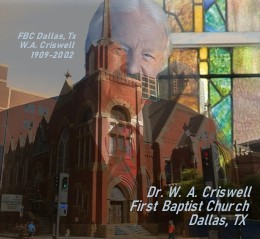
Paul has four of these "faithful sayings." The first occurs in 1 Timothy 1:15, "This is a faithful saying, and worthy of all acceptation, that Christ Jesus came into the world to save sinners." The next is in 1 Timothy 4:6, "Godliness is profitable unto all things, having the promise of the life that now is, and of that which is to come... Read More
This is a faithful saying, and worthy of all acceptation." The third is in 2 Timothy 2:12, "It is a faithful saying—If we suffer with Him we shall also reign with Him"; and the fourth is in Titus 3:3, "This is a faithful saying, that they which have believed in God might be careful to maintain good works." We may trace a connection between these faithful sayings. The first one lays the foundation of our eternal salvation in the free grace of God, as shown to us in the mission of the great Redeemer. The next affirms the double blessedness which we obtain through this salvation—the blessings of the upper and nether springs—of time and of eternity. The third shows one of the duties to which the chosen people are called; we are ordained to suffer for Christ with the promise that "if we suffer, we shall also reign with Him." The last sets forth the active form of Christian service, bidding us diligently to maintain good works. Thus we have the root of salvation in free grace; next, the privileges of that salvation in the life which now is, and in that which is to come; and we have also the two great branches of suffering with Christ and serving with Christ, loaded with the fruits of the Spirit. Treasure up these faithful sayings. Let them be the guides of our life, our comfort, and our instruction. The apostle of the Gentiles proved them to be faithful, they are faithful still, not one word shall fall to the ground; they are worthy of all acceptation, let us accept them now, and prove their faithfulness. Let these four faithful sayings be written on the four corners of My house.
The twentieth century has brought forth unparalleled challenges to
the historic Christian faith. During this century, Christianity's relevance and ultimate validity have been questioned as never before.
This assault on the central truth claims of Christianity has come from two distinct fronts: atheistic secular humanism and the growing
climate of religious pluralism... Read More
While secularism constitutes a significant threat, the issue of religious pluralism poses an even greater challenge. The technological advances of our
century have resulted in a truly global society. America in particular is a nation of diverse ethnic, racial, and religious backgrounds. Our nation is
founded upon the principle of toleration, particularly in the area of religion. We are guaranteed the right of free exercise of religion. This principle
of equal toleration of religion is so strong, in fact, that the worst name one can be called today is an "intolerant religionist." What has happened,
however, is that our idea of democracy has been applied to ultimate truth. Equal toleration of religion has been taken to mean that each religion is
equally valid (i.e., all religions lead to God). This is a fatal non sequitur...
"Let us draw near with a true heart in full assurance of faith, having our hearts sprinkled from an evil conscience,
and our bodies washed with pure water. Let us hold fast the profession of our faith without wavering;
(for he is faithful that promised;) And let us consider one another to provoke unto love and to good works:"
1. More implicit and thorough trust in God. 2. If you are weaned from the world. 3. Fewer reluctant feelings when called to exercise self-denial... Read More
4. Less temptation to sins of omission. 5. Deepening intensity and steadiness of zeal for God's causes. 6. A growing graciousness in accepting the whole will of God...
The consequences of the magnitude of such a broad scale world-wide implementation of a "new church model" cannot be ignored. It must be examined by the serious Bible student and Christian! It must be looked at in light of Bible prophecy. We must heed the warnings of both Jesus' own words when He walked the earth and those inspired by the Holy Spirit written later for our advantage in alertness of end-time events and trends. Not to do so would be perilous. So, I have prayerfully written 5 articles on this demonic phenonemonen with hopes they will help you to understand how serious this modern attack is on the true church of Christ - Articles on the Modern Church.
Heaven's Gate
Strait Is The Gate And Narrow Is The Way
...strait is the gate, and narrow is the way, which leadeth unto life, and few there be that find it. - Matthew 7:14
As I myself draw nearer, I am reminded of a woman I once knew of who said she did not want to go to heaven. When pressed for her reason for such a strange and unbelievable desire she shared that her desires for all that she possesed of earth would have to be sacrificed by her to gain entry. The first thing she mentioned she held so dearly and could not give up was as carnal as her love for food. Imagine. Imagine such a silly yet damnable idol.Imagine being so lost and confused in your belief of what the future holds for you and the eternal choice you must make—to choose hell over heaven.Unfortunately, too many will make the choice as this foolish woman. Is there something so simple and temporal as this woman's treasure that stands between heaven and hell for you?Jesus once asked: For what shall it profit a man, if he shall gain the whole world, and lose his own soul? - Mark 8:36
Dear Sirs,
I teach Old Testament to a group of young people who have committed their lives to Christ and are involved in a national
group called Master's Commission. I would like permission to share your tests with them during a 10 week Bible Course. thank you... dale rains

 Welcome to Adam2.org!


 I am the vine, ye are the branches: He that abideth in me, and I in him, the same bringeth forth much fruit: for without me ye can do nothing. - John 15:5
 And the same day, when the even was come, he saith unto them, Let us pass over unto the other side. - Mark 4:35
 ...weeping may endure for a night, but joy cometh in the morning. - Psalms 30:5b
 ...strait is the gate, and narrow is the way, which leadeth unto life, and few there be that find it. - Matthew 7:14
 ...And the Spirit of God moved upon the face of the waters. - Genesis 1:2b
 The Lord is my shepherd; I shall not want. He maketh me to lie down in green pastures: he leadeth me beside the still waters. - Psalms 23:1-2













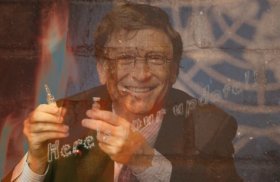 We are at the precipice of having to choose whether we submit our bodies to be altered for our freedom, our very survival--to buy and sell as the Bible warns us about — and there is no going back. Some, in fact, already are being forced to do so. Already industries and businesses are requiring those who wish to utilize their services or enter their businesses the people must wear masks and some now are requiring the COVID vaccination. Revelation's mark is just behind the vail of tomorrow. Christ's return is imminent.
  Read More
 Hide
Hide


 Read More




 Faithful Sayings
 2 Timothy 2:11
 The Challenge of Religious Pluralism
 Proofs of Growth in Grace





